
Where’s the Welsh Cinema?
Nia holds a doctorate from Aberystwyth University and works at the Screen and Sound Archive of the National Library of Wales. She is the co-director of the Abertoir Horror Festival, a programmer for the Wales One World Film Festival and contributes regularly to events and publications on film. Throughout her career, Nia has specialised in issues of representation, inclusion, and access.
Though there were pioneers of cinema working in Wales in the medium’s earliest days, it was 1935 before the first Welsh language film was produced, namely Y Chwarelwr (Ifan ab Owen Edwards), and over a decade later came the next: Yr Etifeddiaeth (John Roberts Williams, 1949) and Noson Lawen (G. Mark Lloyd, 1950).
Two decades later, some of the nation’s greats recognised the power of cinema in the fight for language rights and established the Welsh Film Board. Despite their heroic efforts in the 70s and 80s – which included producing cult films Gwaed ar y Sêr and O’r Daear Hen (Wil Aaron, 1975 & 1981) – there was little official support for their work.
A century after Y Chwarlewr – filmed in the same area – comes Effi o Blaenau, directed by Marc Evans and adapted by Gary Owen from his stage play, Iphigenia in Splott.
The Welsh language has received some relative prominence on the big screen very recently, thanks in the main perhaps to Gwledd (2021) and Y Sŵn (2023), both collaborations between director Lee Haven Jones and writer Roger Williams. It’s unusual, however, that Effi reaches the big screen less than a year since another Welsh language film – namely Tanau’r Lloer (Chris Forster, 2025). The last time this happened, as far as I know, was a decade ago, with Yr Ymadawiad (Gareth Bryn) and Y Llyfrgell (Euros Lyn); and before that, 2008. It’s very rare to get to see more than one Welsh language film in cinemas in a year, if even that.
Since the arrival of S4C in the 80s, and official recognition for Welsh language rights, the last four decades have seen what feels like significant screen activity in Welsh. It’s fair to say that the small screen dominates in this regard, whether that’s television, computer or phone. We’re fortunate in Wales that so many independent cinemas are willing and able to hold special, even one-off, screenings, as this is often the only way to see Welsh language films on the big screen. Rare are the Welsh language films that are widely released, by a ‘major’ distributor.
There is a loss to culture when its imagination cannot be seen on the big screen. For some there might not be a difference between watching a film in the cinema and watching a series on their phone, but that’s a sad perspective. Being able to come together, to watch and listen to ourselves, in the sacred space of the cinema, is an experience that cannot be recreated elsewhere, no matter how good our home entertainment systems.
Without hearing the Welsh language – and all its accents and dialects – in the cinema, an idea grows that there is no such thing as a Welsh language film and that the cinema is not the place for its speakers. There is a cultural void, for us, and for the rest of the world.
I’m not from Blaenau Ffestiniog, but perhaps one of my favorite things about Effi, as well as its gripping story and brilliant performance by Leisa Gwenllian, was how familiar it felt. From the tunnels of the A55, to Victoria Dock, to nain watching Dechrau Canu, Dechrau Canmol, to every single Welshified swear word that comes from Effi’s mouth, the film, despite its tragedy (she’s based on a Greek heroine, after all), is comfortable.
The sheer pleasure of recognizing locations, characters, familiar vocabulary in a film is unparalleled. No matter how cynical one gets, the frisson of recognising a little something of ourselves in a film is important. Being able to do that in a cinema full of other people seems even more essential. It creates a temporary community, in the dark, allowing for cultivation, creation, and reinforcement of communities in the light of day.
Effi o Blaenau is coming to cinemas across the UK from June 19, 2026, with its Welsh premiere at Cellb on June 17.
The film has various connections to Wales including director Marc Evans, producer Branwen Cennard and a cast featuring Leisa Gwenllian, Tom Rhys Harries, Owen Alun, Nel Rhys Lewis, Mared Llywelyn and Sion Eifon. It was filmed in Blaenau Ffestiniog, Caernarfon, Port Talbot and was funded by Creative Wales and S4C.
This article was commissioned by Film Hub Wales as part of its Made in Wales project, which celebrates films with Welsh connections, thanks to funding from Creative Wales and the National Lottery via the BFI.
This article was first published in Buzz Magazine.
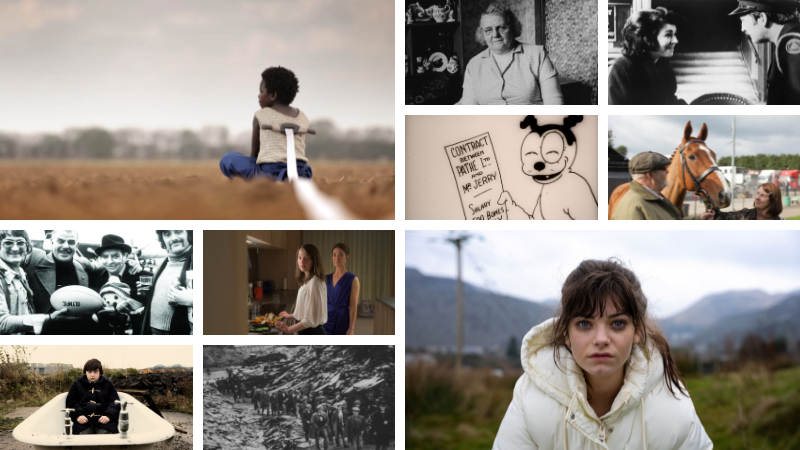
Ten Great Films from Wales that you might not have watched yet!
You might be familiar with staples like Hedd Wyn and Solomon & Gaenor, or cult classics Twin Town and Human Traffic…
With Wales celebrating 130 years since its first known cinema screenings in 1896, we’re taking a look at some of the great Welsh films that you might not have watched yet:
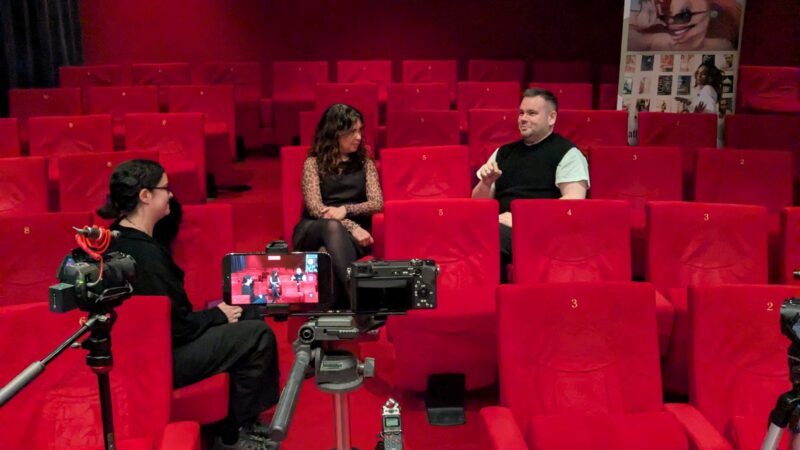
The Future of Welsh Film: Podcast and Video Blogs
Wales celebrates 130 years of cinema in 2026.
The big screen has been home to the pioneering films of William Haggar and Arthur Cheetham from the early 1900s, right through to the latest releases like Effi o Blaenau and Madfabulous.
We’re running celebratory activities throughout the year, including a very special Made in Wales podcast and a series of video blogs from Welsh film festivals and cinemas about their hopes for the future of Welsh film…
Press/film exhibitors can contact us for downloadable versions of all assets.
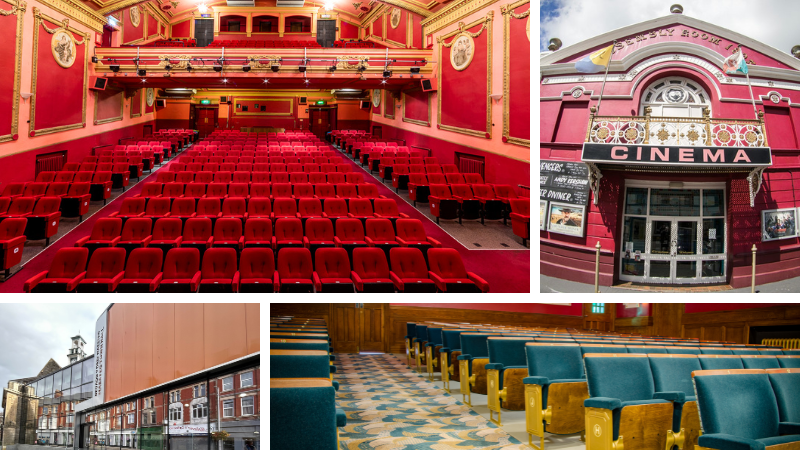
Wales’ Cinema Treasures
Wales celebrates 130 years of cinema in 2026.
In 1896, the first known cinema screenings took place in Wales. The big screen has been home to the pioneering films of William Haggar and Arthur Cheetham from the early 1900s, right through to the latest releases like Effi o Blaenau and Madfabulous.
We’re running celebratory activities throughout the year, including this series of video blogs from Wales’ ‘cinema treasures’. Experience a guided tour of some of Wales’ great cinemas, from the newly renovated, to time-honoured classics that keep the art of film alive in Wales.
Press/film exhibitors can contact us for downloadable versions.

WOW Wales One World Film Festival attends ICO: Developing your Sponsorship Strategy
Annita Nitsaidou from WOW was able to attend the Independent Cinema Office’s training course in London with help from our training bursary.
This short course from BFI FAN, provided practical steps to help festivals and exhibitors build a sponsorship strategy that can effectively build new financial partnerships. This in-person day was the third part of this course, with the previous two sessions being online.
“Attending the Independent Cinema Office’s Developing your Sponsorship Strategy training has shifted how I think about sponsorship: away from ‘help us fund things’ and towards ‘join us in making something meaningful happen.’”
Annita said that through the course she “learned how to clearly articulate WOW’s mission and audience impact in a way that resonates with external partners.” The course provided Annita with structure and guidance when thinking about approaching sponsorship opportunities for WOW festival’s specific rural audience. She came out more confident and strategically minded and is already implementing a new way of thinking surrounding her pitch materials.
The in-person day also provided Annita with an invaluable opportunity to network with other FAN members across the UK where she shared notes and honest ideas and feedback. Annita said “Overall, I returned to work with a sharper, values-led sponsorship approach that feels both more confident and more accountable to our communities.”
Read more about WOW.
Annita was able to attend this training course with the support of Film Hub Wales via our bursary scheme. If you want to attend a meeting, course or event that would benefit your organisation and develop audiences but the costs are prohibitive, you can request a bursary here.
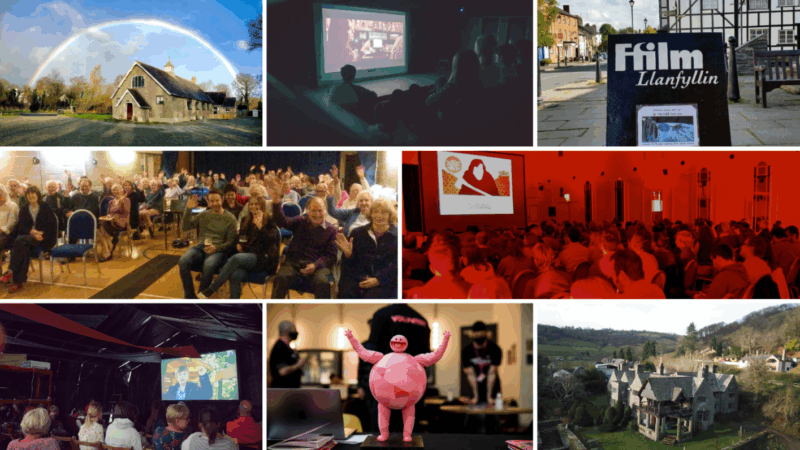
Find your Local Film Club: A Guide to Wales’ Community and Pop-Up Screens
August 2025
Would you love to have a cinema right on your doorstep? Well you might be closer to one than you think! Wales is bursting with over 120 community screens and pop-up cinemas.
For many film lovers, driving over half an hour to their nearest cinema is the norm and we do it because films were meant to be watched on a big screen, right? For some audiences, this just isn’t possible for many reasons and the joy of having their own local community screen means they can access films more regularly. It also gives them the chance to learn the skill of choosing films, setting up their own events, or building a regular film club.
We have all sorts of community screens in Wales. From Miners Halls, to village movie nights, established film societies to pop-up films in libraries or town halls. Some screen every month and others run special themed films from time to time.
If you missed our previous blogs on festivals a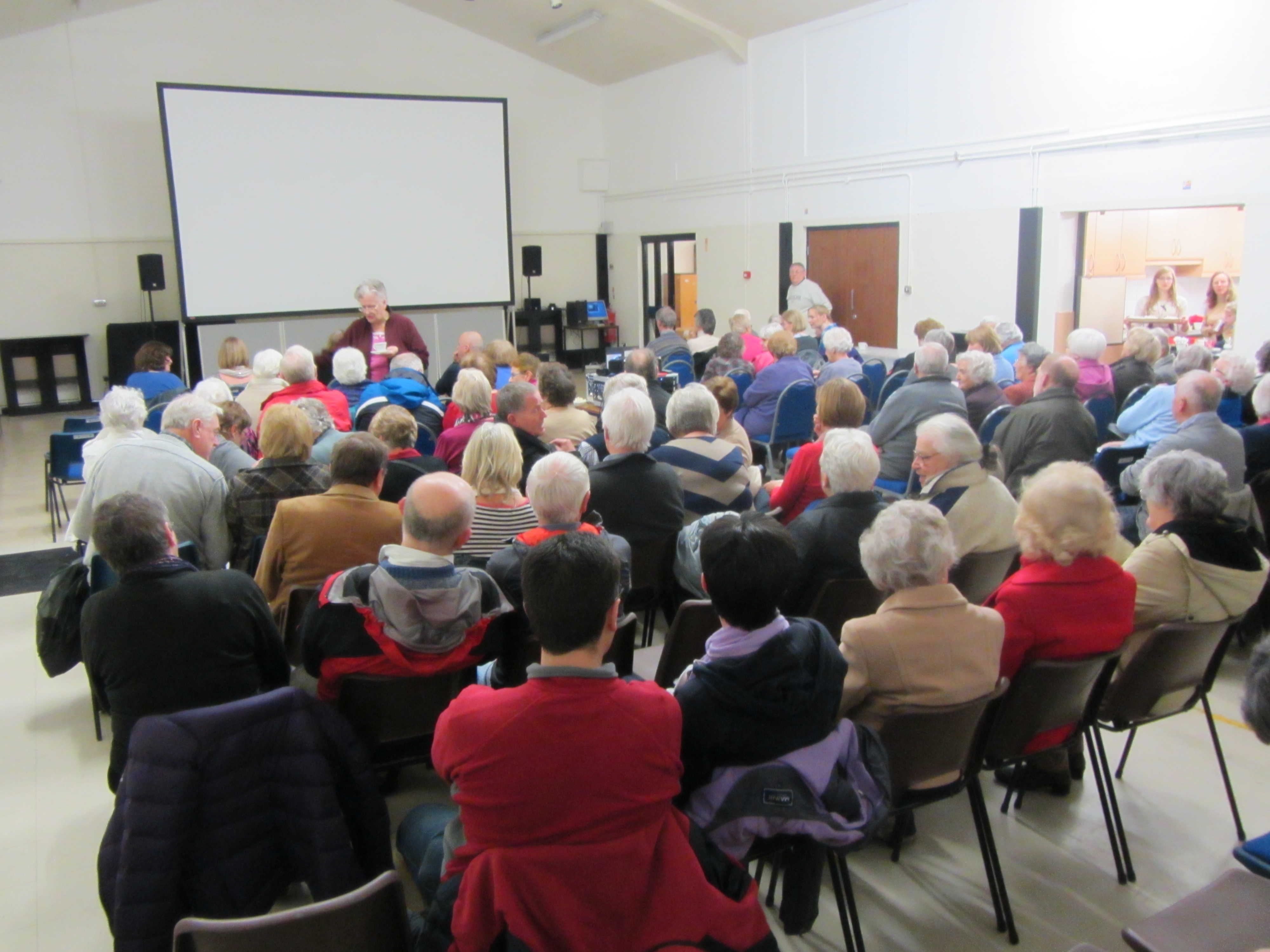 nd cinemas in Wales, then you might not be familiar with who we are at Film Hub Wales. So just before we get stuck into Wales’ community cinemas – a reminder that our job is to support Welsh ‘exhibitors’ of all shapes and sizes to bring the best UK independent and international films to Welsh communities year-round. We fund, train and advise, offering them support where needed.
So, what do community cinemas offer? Well, we’re glad you asked! The great thing about them is that they’re usually run by volunteers who love film. So, if you do too, you’re going to meet a lot of likeminded people and hopefully make some friends while you’re at it. They often have top facilities, from screen to sound, to make your experience the best it can be.Take Dinas Powys Community Cinema in Murchfield for example. They screen on the second Saturday of every month and have invested regularly in their facilities from a fixed retractable screen, to ceiling-mounted projector, new control box with two Blu-ray/DVD players, acoustic ceiling panels to eliminate the echo, blackout blinds, and an improved speaker system! Are you as impressed as we are?
If you’re looking for the best indie films from across the world, Abergavenny Film Society is the one for you. We heard on the grapevine that it’s the longest running film society in Wales. Get your membership quickly though, they’re always selling out! Another club known for its top film selections is Fishguard Film Society, where the community film panel help to select films at their Pembrokeshire base, the gorgeous Theatr Gwaun.
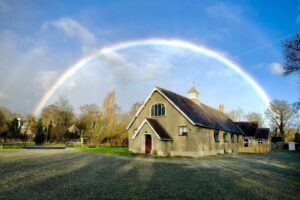
At Film Hub Wales, we’ve been working with TAPE Community Music and Film for the last few years to help establish new community screens across the North as part of our Spotlight project. One of the sites, Llangoed Village Hall (Sinema Llangoed), has transformed into a state-of-the-art cinema with 4K laser Epson projector, a new stereo sound system, and a large-format cinema screen – oh and the best Welsh-language, UK indie and international films!
If you’re in the North East of Wales, one not to miss is Halkyn Mountain Community Cinema, with its beautiful mountainous backdrop in Flintshire. Set-up in 2015, they show a film every two months in Halkyn Parish Hall / Library with hot drinks, popcorn and biscuits. Or you’re in Carmarthenshire, Sinema Sadwrn in Llansadwrn regularly show films on the last Friday of each month – from classics to comedies, dramas to foreign language films, animations and documentaries, there’s plenty to choose from. They describe their events as friendly occasions with the pub next door for a pre/post film drink and chat.
We’re also lucky to have the support of not one but two touring providers. Flicks in the Sticks and Moviola. Flicks, which transforms village halls and community spaces into pop-up cinemas is run by Arts Alive around Shropshire, Herefordshire and the Welsh border / mid-Wales. Moviola offers programming and film booking service for community venues as well as touring schemes across the UK, with concentration in the South East of Wales. Both organisations work with all sorts of operators in these regions.
If you’re looking for special events that take you into Wales’ castles, clubs and community centres, then you definitely want to seek out Darkened Rooms. Also one not to miss is Cinema Golau – a platform for emerging Black and Ethnic Minority filmmakers, which brings international Black independent films to a host of local Welsh venues.
With over 120 community providers to choose from, there are so many recommendations we could give you. With that in mind, we’ve put together a full list and a map to help find your local club or event. We’ll be highlighting them our socials, as well as where you can find your nearest festival and full-time cinema. Just a note – we’re not affiliated with all of the sites listed and are not responsible for their activities. Please check their local websites for more information about their current screenings. Many community cinemas take a break over summer and come back with their autumn programme from September onwards.
If you run a community screen and you’re not listed below, this may be because you’re listed as a cinema or mixed arts space but if would like to be added (or you would like to be removed from this list), please get in touch with us. We’d love to hear from you.
Welsh exhibitors can also become a member of Film Hub Wales for free and apply for audience development funding as well as accessing training, networking and advice.
Please check the cinema websites for the latest information.

*Organisations may be based outside of Wales and deliver across various Welsh locations.
Hub Members attend Film Festivals in Texas and Sydney
Hub Members attend 2024’s SXSW and Sydney Film Festival with help from training bursary

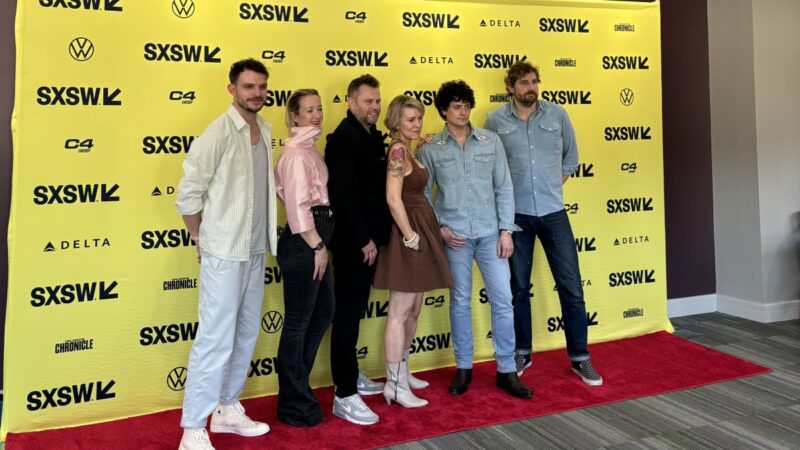
SXSW festival celebrates the convergence of tech, film, music, education, and culture, helping creative people achieve their goals, and takes place in Austin, Texas every March. Hub member Robert Corcoran from 73 Degree Films attended 2024’s SXSW Festival to build on his relationships in the industry and attend the premier of Welsh film Timestalker. Akulah Agbami from Sheba Soul Ensemble wanted to attend the 2025 Sydney Film Festival to explore films and open new dialogues and awarenesses with indigenous Australian and Maori women film-makers whose films aren’t very accessible outside of Australia.
“Geographical barriers are clear as many of these filmmakers (travelling to SXSW from all over the world) will not have considered submitting their work to a Welsh (or perhaps even a European) festival previously, therefore meeting someone such as myself, to explain the benefits can set them at ease.” – Rob
Working on behalf of FOCUS Festival, Rob felt his time at SXSW was extremely valuable to grow his network as well as speaking to filmmakers to “convince them of the benefits of submitting their work to a Welsh festival.” Attending the premier of Timestalker also gave Rob an insight into the appetite for Welsh film overseas, providing ideas on how to connect with international audiences. Rob feels his attendance at SXSW resulted in a marked increase in US submissions to FOCUS Wales 2025. “Additionally I managed to meet with key people at the festival to kickstart conversations around how to continue the work and increase ties further.”
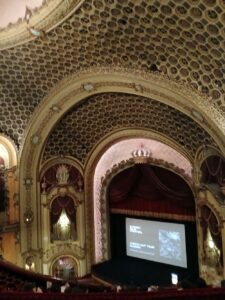
Akulah, who is the Director at Sheba Soul Ensemble, who have hosted intimate and inclusive events to celebrate Black women’s film history on screen, wanted to find out how to source films from indigenous Australian and Maori women film-makers. Akulah noted that no First Nations people attended any of the screenings and found the event still has some work to do to represent this community. With this in mind, she still came away incredibly inspired, and delighted to access several brilliant films by Black women directors, managing to watch 11 films and one short with one animation that she hopes to bring to Wales that will appeal to 16-25s and an older queer audience.
“The first time I had the ‘banquet buffet’ film festival experience was whilst working in Sydney for a year after university… But so many things I had forgotten. Like how hauntingly exquisite the State Theatre in Sydney is…For the 72nd SFF edition, I experienced 11 films and a whole lot more.” – Akulah
Rob and Akulah were able to attend these Film Festival’s with the support of Film Hub Wales via our Bursary scheme. If you want to attend a meeting, course or event that would benefit your organisation and develop audiences, but the costs are prohibitive, you can submit an application for support here.

The A – Z of Welsh Cinemas Where to Watch Film on a Big Screen in Wales
June 2025
You might be surprised to hear that we have a host of established cinemas in Wales, 80 in fact. Now these come in different shapes and sizes. Some are mixed arts centres offering multi-disciplinary programmes, others are full time independent or commercial cinemas that specialise in film and some have occasional programmes.
We’ve not even got to the community screens yet; there are many more of these to mention (and we’ll come back to that in our next blog) but today we’re expressly talking theatrical.
So, where to begin. Let’s start by explaining that it’s our job at Film Hub Wales to support Welsh cinemas to bring the best UK independent and international films to Welsh communities year-round. We fund, train and advise film exhibitors, offering support where needed. We know a film won’t be seen just because it’s good enough and that’s where cinemas come in. Their job is to think about the audience. Who would enjoy this film, how can they be reached and what impact could the film have on local people.
Welsh cinemas are known for being at the heart of their communities, their eclectic buildings and rich histories. They generally offer much more than movies alone.

Take the Magic Lantern Cinema in Tywyn, Mid-West Wales, for instance. Having first screened a silent news reel in 1900 as the town’s Assembly Room, the building has evolved into a much-loved, unique, full-time cinema with house band, secret garden, and cocktail bar. Not only that – they also lead events in the rural community such as opening on Christmas day for local people living alone and create employment opportunities for young people in the town (we’re told their team love it so much, they often don’t want to leave!).

On to the North West of Wales, if you find yourself in Blaenau Ffestiniog, you have to pay a visit to CellB. Based in a converted police station, with two screens and a stunning backdrop of slate mountains, this place is bursting with charisma. Led by Gwallgofiaid, a not-for-profit social enterprise that provides creative training for young people, the site has a hostel, regular gigs and a wood fired pizza oven..
Over in the North East of Wales, we have to mention the impressive renovations at Theatr Clwyd, known as the largest touring theatre provider in Wales. You’ll want to hang out and take in the panoramic views of the town from their new glass-front building, visit their restaurant run by acclaimed chef Bryn Williams and of course, watch a film in their purpose-built cinema opening from July 2025.
We could keep going with this all day… If you’re in South Wales a cinema you can’t miss is The Savoy Theatre in Monmouth.
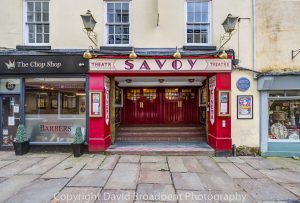
The oldest working theatre site in Wales, this beautiful grade 2 listed building looks like the cinema that dreams are made of.. Or if you find yourself in Cardiff, there’s Chapter Arts Centre, which has a huge year-round programme of indie film as well as experimental performances, exhibitions and café bar.
Over in West of Wales, there’s Theatr Gwaun in Fishguard. It’s an independent community theatre, supported by a passionate team of volunteers, with cinema, bar and café with a vast selection of events, with the beautiful Pembrokeshire coast just a stone’s throw away.
You could basically map out a journey around Wales, with a cinema on each stop. Sound good? To help with this we’ve put together a full list and a map to help you see where each cinema is. We’ll be highlighting them on our socials, as well as where you can find your nearest festival, film club or community screen.
If you run a cinema and you’re not listed below, this may be because you’re listed as a community screen but if would like to be added (or you would like to be removed from this list), please get in touch with us. We’d love to hear from you. Welsh cinemas can also become a member of Film Hub Wales for free and apply for audience development funding as well as accessing training, networking and advice.

From Animation to the Great Outdoors: Discover Wales’ 40 Film Festivals
May 2025
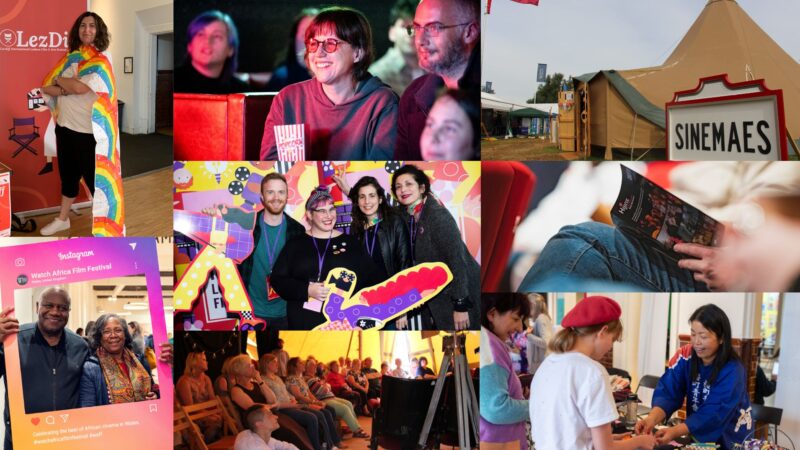
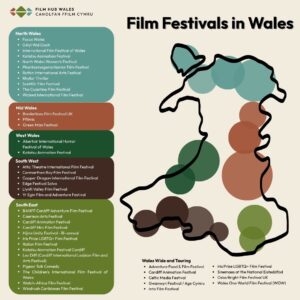
Did you know that Wales is home to 40 festivals of all shapes and sizes? Many of these are dedicated to film, or have regular film offers. Whether you’re an emerging filmmaker looking for a place to launch your next short, or you’re an avid cinema goer seeking out the best new films, our Welsh festivals have you covered.
At Film Hub Wales, we work with film festivals, helping them to bring the best UK independent and international films to Welsh communities year-round. Festivals play a crucial role in film chain. They showcase new talent, often helping them to secure sales agents and distribution deals – reaching new audiences at home and across the world. They’re also known for special events, unique and bold film choices that audiences might not see elsewhere and a place for industry and the public to come together.

So what festivals are waiting to be discovered on your doorstep in Wales? Well, there are at least 40 (that we know of) and this doesn’t include the many more touring events that pop-up in cinemas during the year and wider arts festivals that occasionally screen films. 34 of these are specifically Welsh events and 6 are UK or international events that tour to Wales.
Many of the festivals have unique themes (20 that we count) such as the SeeMôr Film Festival which explores all things coast and sea in Anglesey, there’s Cardiff Animation Festival and Kotatsu Japanese Animation festival, or for the thrill seekers there’s Abertoir International Horror Festival – which is about to celebrate its 20th year in 2025.

Various festivals offer dedicated support for new talent such as Carmarthen Bay Film Festival, Cardiff Mini Film Festival and Focus Wales. For young audiences there’s Wicked Wales and The Children’s International Film Festival of Wales. Phew, we can keep going? For the best new local and global films there’s Wales One World, for a taste of Africa there’s the Watch-Africa Film Festival, Hijinx Unity Festival celebrates disabled, learning disabled and/or autistic artists and our largest film festival in Wales, Iris Prize LGBTQ+ Film Festival is home to the largest short film prize in the world. We’re spoilt for choice, right?
As well as a great place to discover new films, if you’re starting out in the film industry and looking for volunteering opportunities, festivals are a brilliant place to learn new skills and make contacts.
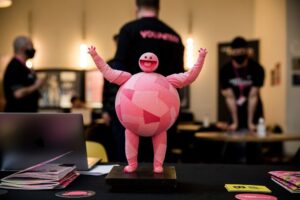
Around 50% of the festivals currently take place in the South East of Wales, with the other 50% in North, East and West of the country. Many offer online events alongside their in-person programmes, as we know getting there can be a challenge.
To help with this we’ve put together a full list and a map to help you see exactly where and when each festival takes place. We’ll also be highlighting upcoming festivals monthly on our socials, in case you need a reminder, as well as where you can find your nearest cinema, film club or community screen.
If you run a film festival and you’re not listed below and would like to be added (or you would like to be removed from this list), please get in touch with us. Film Festivals in Wales can also become a member of Film Hub Wales for free and apply for audience development funding as well as accessing training, networking and advice.

Hub Members Attend ICO Screening Days
Film Hub Members attend ICO’s Screening Days with help from training bursary
The ICO (Independent Cinema Office) runs national Screening Days events, a staple in the independent cinema calendar giving exhibitors the chance to watch the best upcoming film releases from across the globe and discuss them with industry peers. The Screening Days took place in both Nottingham and London in Autumn and Spring where hub members from Abergavenny Film Society, Chapter Cardiff, and Pontardawe Film Club went along to not only see upcoming releases to help develop their programmes but also for invaluable networking and discussions.
Here’s what our members told us about their experience:
These informal discussions are so helpful in sharing best practice and picking up hints and suggestions on marketing appropriate to the films. Meeting with the Film Promoters in person is always appreciated as it makes the booking of the films straight forward.
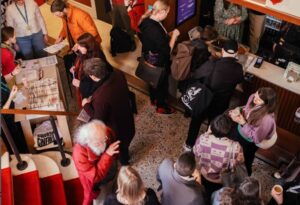 The ICO Screenings Days provide members with the opportunities to explore new UK independent and foreign language film releases as well as being able to discuss programming of various films directly with the representatives of distribution companies. David Charles Price attended on behalf of the Abergavenny Film Society to explore new UK independent and foreign language film releases. Dave came away with a plan for the next season’s programme, new contacts and potential new partnership with Borderlines Festival where they plan on sponsoring a film. Angie Dickinson attended on behalf of Pontardawe Film Club and found this opportunity significant in the programming for the venue, ultimately amending their original suggestions based off of the outcomes of attending the Screening Day as well as new marketing ideas thanks to meeting Promoters in-person.
It was not only useful to hear about strategies but also essential to demonstrate solidarity and compassion for each other as colleagues in our sector as we move forward and help each other.
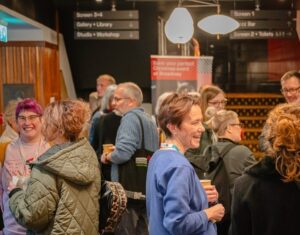
Claire Vaughan from Chapter Cardiff attended the Screening finding the in-person films vital to having greater programming knowledge. Having secured bursary funding, Claire was also able to attend the ICO Audience Development day and arrange meeting with other venues in the area who have a similar offering to Chapter, visiting Derby QUAD, HOME Manchester and Phoenix Leicester. The visits and audience development day provided Claire with more in-depth knowledge on young audiences, an understanding of other venues’ strategy on resilience, leading to further meetings, as well as information on audience’s Eco credentials which she was able to feed back to the team and the UKCA policy.
Dave, Claire and Angie were able to attend the ICO Screening Days with the support of Film Hub Wales via our Bursary scheme. If you want to attend a meeting, course or event that would benefit your organisation and develop audiences but the costs are prohibitive, you can submit an application for support here.
TAPE talk Community Cinema Programming
Our Marketing and Outreach officer Holly spoke to the Media Club at TAPE Community Music and Film about their Neighbourhood Cinema project and how they programme and market films to rural communities in North Wales.
What is the Neighbourhood Cinema project?
We launched a cinema project called ‘Neighbourhood Cinema’ for communities across North Wales in 2023, with support from Film Hub Wales via BFI National Lottery funding. The project currently runs screenings at The Luxor Community Cinema in Llanfairfechan, various sites across Anglesey via Mencap Môn and at TAPE’s base in Colwyn Bay. We’re also exploring a number of ongoing partnerships with the aim of bringing films to communities where it’s more difficult to access regular film screenings.
What is the Media Club at TAPE and how is it involved?
Specialising in creative inclusion, we ‘co-created’ the project in collaboration with our Media Club – a safe and supportive space which offers hands on experiences to a cohort of people from across the local community. The Media Club focuses on giving people aged 18 and over the opportunity to gain experience in podcasting, sound recording, film reviews and cinema programming. The club meets weekly as a part of TAPE’s session schedule.
How do you programme films?
We watch films as a club. Sometimes we watch them at home by ourselves or as a group. We then come together to discuss whether we think they will be good choices for us here at TAPE and the other Neighbourhood Cinema venues we programme for. Recently, the group all really enjoyed Snow Leopard, The Mountain Within Me and Strange Darlings. We are keen to fit those into ours and Llanfairfechan’s programmes somewhere! Snow Leopard was one of the best films we have seen in a long time, it was absolutely brilliant. We try to pick films that people wouldn’t necessarily choose to watch or can’t find at mainstream cinemas, so we can provide that experience for them.
Do you try to estimate audience numbers for your screenings?
We do try to estimate numbers for the screenings as we programme. It’s difficult to be concrete about it as a lot of our screenings are free. People sign up for tickets but may not make it to the screening. We’ve tried lots of different ideas to retain as many people as possible, but you can’t win against the elements! If it’s been raining all day, we have reduced numbers (even though a rainy day is the perfect excuse to hide away at the cinema!)
With the Neighbourhood Cinema project, we’re trying to work with venues in places people can get to despite weather and transport issues. Small rural villages are perfect because people do tend to make the journey if the film is really good and they can walk to it (and we always programme really good films!)
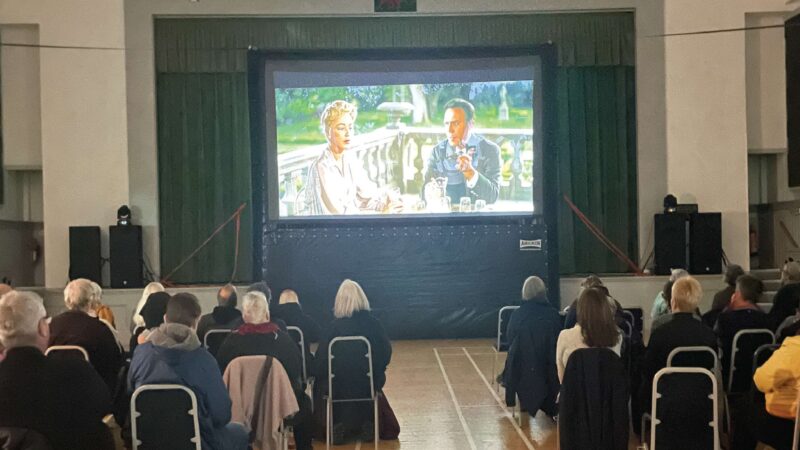
The Luxor Community Cinema in Llanfairfechan is a really good example of this. They hit the ground running with their first two screenings. I was at The Sound of Music screening and it was packed – the atmosphere was fantastic and we had such a good time. They also screened Brian and Charles and they had a great crowd there as well. After both screenings, they received feedback from the audience and there is a real enthusiasm there. People are making suggestions about what they want to see, and it feels like the venue has become involved within the community straight away and we have a really good partnership.
It’s great to hear that the Luxor has had such an amazing start! What do you think is working particularly well in Llanfairfechan?
Chris Potter, who runs the community hall is really active in running the whole centre. They are constantly telling people about the cinema and the upcoming screenings. The venue is already very well used by the local community, but the cinema has generated a lot of excitement in t

he village so there is enthusiasm there from the very start. They’ve also ensured that the community a part of the cinema experience, asking them for feedback on the screenings and suggestions about what they would like to see in the future. I think the village has wanted the cinema back for a long time.
We helped them out with the opening of the cinema, as we loaned them our air-screen whilst they crowd-funded the money for some permanent projection kit. We didn’t want them to have to wait any longer!
I think it was also a great idea to show The Sound of Music as their first screening, as it was the film that they were going to show before the Luxor Cinema closed down in 1964. The apprentice projectionist from 1964 actually came along to the screening as he still lives in the village, which just adds to the local history of it all! The Luxor is such a good example of what happens when you have the perfect venue and the perfect team.
Where do you go from the programming stage? What sort of marketing do you currently do to spread the word about your screenings?
We’re very active on our social media platforms – we mainly use Instagram and Facebook. We also produce an audio podcast that goes out every Saturday and they’ve been doing really well. Local radio has been really important for us, they’re supportive of our regular bespoke adverts for the events. It always feels like there is more marketing that we can do, and it is crucial to give people as much time as possible to find out about our events.
Is there anything else that you have done outside of marketing to increase engagement with your programme?
We’ve just started to do some programming with partner organisations. We started by working with Mencap Môn to programme for the Oriel Môn venue in Anglesey and that has been amazing from the start. We have just started to work with an organisation called Anheddau, which is a disability services and support organisation here in North Wales. They want to engage with the people who use their services more, so we are creating a bespoke programme together, which will be really special. We’re also in the process of talking with organisations like Mind to create similar bespoke programmes there as well.
We’ve also been doing some outreach screenings at film locations which has been really fun. We hosted a Halloween screening of our second feature film Approaching Shadows at the pub featured in the film. The screening was packed! The crowd were raucous in the best way and they loved it, it worked really well. We’re planning on going back to that same village in January to screen Brian and Charles, as that was also filmed there! It is a different way to engage these communities with Welsh films as well which is nice.
It’s a really exciting time for the project and we can’t wait to see where it goes in 2025.
Find out more about the Neighbourhood Cinema project here.
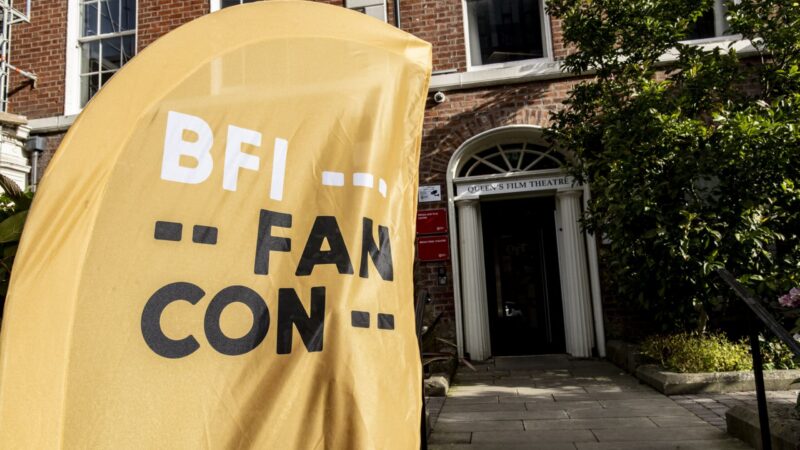
Cardiff Animation Festival attends BFI FAN CON 2024
Ellys Donovan, Festival Producer of Cardiff Animation Festival tells us about her experience at BFI FAN CON 2024.
BFI FAN CON is a brand new conference for BFI FAN (Film Audience Network) members, from small community cinemas and touring collectives right up to large multi-screen independent cinemas and landmark film festivals. The inaugural event took place in September 2024 (Belfast) and Ellys attended on behalf of Cardiff Animation Festival.
Here’s what Ellys told us about her experience:
I had a brilliant time attending my first BFI FAN CON in Belfast. I attended a lot of insightful talks, discussions and training sessions and it was brilliant to meet everyone and talk so passionately about film exhibition and festivals.
Ellys attended the following talks, all of which she found were engaging and informative:
- Spotlight: Working with Communities in Underserved Areas
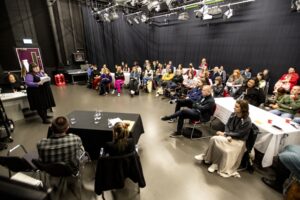
- Making Film Festivals More Sustainable and Inclusive
- Integrating Accessible Cinema Experiences For All Audiences
- Deaf Awareness Training
- ‘We’ll Come To You’ People Centred Approaches to Film Exhibition
- The Evolving Role of AI in Cinema
- Family Fortunes: Reaching Families and Children
The ‘Family Fortunes: Reaching Families and Children‘ talk was presented by Exeter Phoenix and Cinemagic Film Festival which explored how they have successfully engaged children / family audiences with their programme and developed a sustainable practice with families being one of their biggest audiences. This is something Cardiff Animation Festival will consider when programming in the future and how they can bring new content to families that would otherwise not have access to it on the big screen.
Read more about all the sessions above.
A community engagement session, We’ll Come to You: People-Centred Approaches to Film Exhibition (curated by Linnea Pettersson) explored potential barriers for audiences from underserved socio economic backgrounds and what can be done to to address them – this was helpful for Ellys in relation to the touring programmes they offer to communities across Wales and how they can consider a people-centred approach to their programming.
Linnea Pettersson is the BFI FAN Socio Economic Champion, read more and find resources here.
Ellys made several new connections with festivals and cinema programmers across the UK and Ireland which could result in more exciting collaborations for Cardiff Animation Festival in future. The new knowledge, training insights and contacts will be shared with the festival team to continue improving Cardiff Animation Festival events for the years ahead.
…the lunches and dinners at BFI FAN CON were a great, relaxed networking opportunity to meet fellow film exhibitors and gain an insight into how everyone approaches their work in a similar role to me – which is something I don’t often get the chance to experience.
Ellys attended BFI FAN CON with the support of Film Hub Wales via our Bursary scheme. If you want to attend a meeting, course or event that would benefit your organisation and develop audiences but the costs are prohibitive, you can submit an application for support here.